Dr. Eliyahu M. Goldratt spent his entire adult life fighting to show that it is possible to make this world a better place. We must have the honesty to see reality as it is, we must have the courage to challenge assumptions, and above all, we must use the gift of thinking. Having applied these principles to various management fields, he created the Theory of Constraints. His concepts and teachings have expanded beyond management and are being used in healthcare, education, counseling, government, agriculture and personal growth - to name a few fields using TOC. His legacy is invaluable.
On June 11th, 2011 at noon, Eli Goldratt passed away at his home in Israel in company of his family and close friends.
The strength and passion of Eli allowed him to spend his last days sharing and delivering his latest insights and breakthroughs to a group of people who have committed to transfer this knowledge to the TOC Community during the upcoming Theory of Constraints International Certification Organization Conference in New York.
It was Eli's last wish to take TOC to the next level - truly standing on the shoulders of the Giant he is.
"I smile and start to count on my fingers: One, people are good. Two, every conflict can be removed. Three, every situation, no matter how complex it initially looks, is exceedingly simple. Four, every situation can be substantially improved; even the sky is not the limit. Five, every person can reach a full life. Six, there is always a win-win solution. Shall I continue to count?"
Dr. Eliyahu M. Goldratt
1947- 2011

Mark Graban: Welcome to episode 178 of the podcast for June 20th 2013 my guest today is Drew greenblat he's the president and owner of marlin steel wire products a manufacturing company based in Baltimore now I met Drew I was really impressed with his keynote talk at the recent am southwest region conference that was held here in San Antonio and Drew's company is being very successful competing against uh cheap Chinese Imports by using lean and the theory of constraints method ologies being really passionate about serving their customer needs and making a really noticeable commitment to and an investment in their employees so I think whether you're a manufacturing company that's looking at how to compete against low labor cost countries or if you're just interested in the offshoring reshoring issue or if you're any organization looking to uh be successful by partnering up well with all of your employees I hope you'll find um this discussion inspiring now if you go to lean blog.org 178 you can find links to a couple articles about Drew and his company and you can also find a link to the video of um Dr Ellie Gold rat's last speech in 2011 um Dr gold Rat of course is is known for the theory of constraints methodology and the book The goal and and others that you might be aware of um Drew and Marlin steer have shared a link to a recording of that video that's hosted on their website and I think you'll probably want to check that out as well so again go to lean blog.org 178 and for all past episodes you can go to lean podcast. org thanks for listening but
Speaker: Drew it's a real pleasure to have you here as a guest on the podcast today thanks for joining us hello so can you start off Drew um introduce yourself and uh and your company for the listeners please.
Drew Greenblatt: Super my name is Drew greenblat I'm the owner of marlin steel we're a manufacturer of she metal Fabrications and material handling baskets wireforms we make everything in Baltimore and we ship all over the world.
Mark Graban: And how how long has the company been in business.
Drew Greenblatt: We were established in 1968 I bought the company in 1998 and for the last seven years we've been growing seven years in a row despite the recession and uh we're very optimistic we're very bullish about the future the thing we're most proud about is uh our safety records we've gone over 1,610 days without a safety incident.
Mark Graban: Well that's great and I'm sure a lot of that um so we're going to talk more about what you've done with lean and um I mean would you credit before we get in more detail about that would would you credit what you've done with lean or you know what would you attribute the uh safety record to.
Drew Greenblatt: That's that's great to hear we we have a safety culture and and lean has a big impact in improving your safety because when you're mean you look at every element of what an employee does and you try to reduce or eliminate nonv value added steps and you really focus in try to get your arms around every every activity the employee does and says is that really helping the cause and if any aspect of it is in an unsafe manner uh you want to figure out tools and techniques to eliminate it so they never do anything unsafe.
Mark Graban: Well and and I I think that that's absolutely right and that ties into you know as we're going to talk later um I I was really impressed when I heard you speak at am and what s like um you know very people focused culture and S like you're doing some great things um in terms of you know investing in in your employees and taking a really good long-term view but before we get into some of that detail you know kind of curious I like to ask um all of my guests I mean how how did you first get introduced to lean was it as president of marlin steel did you know about lean before you bought the company um I'm curious to just hear how you got introduced to the.
Drew Greenblatt: Methodology the company I bought was not at all lean uh the company I bought was uh doing okay and uh that's why I bought it what happened was we uh ran into some challenging challenging times that were devastating to the company uh and we had to transform we had to up our game so we could be competitive and Thrive and prosper in the future we were on a horrible descent because of uh Asian Imports we were on a horrible descent because our primary client base uh was was was atrophying and we had to morph uh to a new style of client that demanded quality products they needed them highly engineered and they needed quick shipments and you have to be lean to be great quality you have to be lean uh to ship quickly so I was floundering around I realized I had to morph and migrate towards a quality environment to to a quick ship environment and I couldn't figure out a way to do it and uh through through my uh a network of friends and accomplished business colleagues somebody recommended to me that I should pursue uh lean manufacturing they told me I should read the book uh by Ellie Gold rat called the goal and that was transformational to Marlin when I read that I realized this was our future this is what we have to do to up our game so that we could be competitive so we could survive the Asian onslaught of cheap imported products and uh we deployed the techniques from the book The goal and it literally saved the company.
Mark Graban: And in in what way I mean if if you can expand on that I mean I know Amy you were talking about um the pressure from Asian Imports looking at their price compared to your material cost I mean yeah how how did you apply so not just lean but theory of constraints or maybe a combination of of those methods I mean what what what did you do how did you how did you tackle this.
Drew Greenblatt: What we did is we focused on it it it taught us to focus on our choke points and look where the big piles of work in process were stacked up high at the time when I read the book we would have 11 12 13 tractor trailer loads of work in process uh of storage outside our facility um just tied up outside all that cash tied up uh this is process baskets that were in mid completion and then we would have to find which tractor trailer The Working process was in we'd have to load it back into our Factory and then we'd realize some of the work in process was a little bit off and we'd have to scrap that it was a horrific uh process that we had before we engaged with mean manufacturing we started we migrated to one piece flow where we would make one part at a time from start to finish and that was extremely helpful for our success and and getting us on the Journey of lean seeing the benefits of One Piece flow really uh energized us to pursue it more vigorously uh we we all of a sudden had less scrap we all of a sudden had more cash because we had less work in process all sudden uh didn't need this 12 13 active trailer loads of uh work in process and down jocking these trailers back to the factory moving Parts in and out we didn't have to have people accounting for it with clipboards it was just easier to run the business we also started shipping faster because all of a sudden we didn't have all this work in process we were shipping Same Day stuff that people asked for started getting more reorder we started getting happier clients we started being able to ship things to clients uh when they had unreasonable dates it was really uh transformational to the company.
Mark Graban: And when you talking about your your customers and primary products um the conference you you you talked about Bagel baskets and I mean is that is that a bulk of your business or just one of your product lines if you can talk a little bit more about your products and and the customer needs of what they were demanding in terms of quality and delivery.
Drew Greenblatt: When we first bought the company uh 100% of our sales were Bagel baskets for the um the growing Bagel Market in the mid 90s Bagels were very INF fad so there was a lot of bagel shops opening up and we were selling all the baskets for all of those bagel shops it was a great business because uh nobody else did it uh two terrible things happened the first one was China realized they could bring in Bagel baskets for cheaper than I could buy steel uh that was devastating to our business because we couldn't compete the second problem was the Atkins diet this was a diet that came up um in in the mid uh in the in the early 2000s where people stopped eating carbohydrates well the number one carbohydrate food is bagels so all a sudden people stopped eating this so this was The Perfect Storm for our business all of a sudden a perfectly solid strong business fell apart because these two terrible uh these two terrible Confluence of events so we had to morph and around this time we got an a phone call from an engineer at bowling uh who wanted a customized basket an engineered basket he needed high quality and he needed it quick so we realized that this was a new market that we should pursue because uh you know China couldn't offer this and uh this was not a fad this was you know process engineers at Amin process engineers fizer and Merc they need these kinds of high quality quality baskets they need these kinds of products uh quickly and so we migrated from The Bagel industry where our clients literally didn't own tape measures so we could ship a basket plus or minus an inch and they wouldn't know it to all a sudden were catering to markets where they needed things plus or minus 128 of an inch so we uh it was a big evolution and again we attribute a lot of our success to lean manufacturing and our Embrace of lean you know one critical component of lean is that you have to have employees embrace it and you you can't use lean as a way to sack employees you have to you have to embrace your employees and you have to get them on board and and excited about it and come up with elegant ways to reduce their Material Handling to reduce inventory to reduce unnecessary tasks and uh you know an intrinsic element of lean is that you can never ever uh reduce headcount reduce employees as a result of lean and this in gender trust and this dovetails nicely with our philosophy which is we don't look at employees as a uh variable cost we look at employees as a to as a fixed cost sort of like rent or sort of like a a mortgage payment uh sort of like um you know something that you have to pay pay in month in month out when you look at your employees as a fixed cost like lean manufacturing you think of them differently you you want to invest in them you want to teach them about lean you want to train them on all the equipment so that um they get the most out of that equipment so they could ship faster they could ship a better quality product if you look at an employee as a variable cost you know uh you don't want to train them because you're thinking of them in a very shortterm way like that they're going to be gone tomorrow if bookings dry up and when you have a lean environment you you embrace your employees you you you want to teach them about things you want to train them you want them to be safe it's very good for the culture it and it improves uh employee loyalty.
Mark Graban: Well yeah and I think you know Toyota sets a good example of that you know the plant here in San anonio and others uh you know when they've had downturns due to sales or you know part shortages due to the tsunami uh you know they they didn't lay off their employees they're investing in them they're training them they're having them go do community service projects which is actually a great way of developing um people in addition to serving the community and you know you might be surprised you know with you know Hospital sadly Drew um will treat nurses highly skilled nurses highly trained nurses as variable cost if patient census is down they send the nurses home early and that's just I think you know we're trying to help open eyes of of healthare leaders of why that might be um you know just the you know too much of a short-term Focus save on our productivity today rather than investing in people's capabilities um it's really something I I I I I agree I I don't I I think that it engenders trust it engenders loyalty if you treat your employees like professionals you treat them uh like dedicated long-term uh long-term people and you don't you don't say oh we're a little bit short of work today okay everybody go home uh we're going to save a couple hours that doesn't engender trust instead what you should do is you should say listen let's figure out a way to 5S a zone of the office or the zone of the medical area so that uh the next time we do this it's uh more productive it's you know the the the scalpel are closer to our hands uh and and it's easier to clean up you know so the mentality should be one of uh focusing in on how to improve the process how to improve uh how easy it is to accomplish tasks um and it should not be a way to uh cleverly reduce variable cost hours um and that kind of approach is very shortsighted and I think it uh does not help the long-term relationship between employees and the management of of a of an entity.
Mark Graban: Yeah now um one other question on on on that I mean were were you very explicit and direct with the employees of making a commitment that nobody would lose their job due to leane or other Improvement methods.
Drew Greenblatt: Absolutely uh and and uh you have to start with that Foundation I mean that has to be the opening paragraph of uh this journey that you're about to embark on that we're going to come up with a lot of clever techniques um it's going to reduce some steps it's going to reduced waste the end result will be that we're going to ship faster we're going to get more orders our clients are going to be really happy because our quality is going to go up we're going to get more reorders then and I'm going to have to hire people uh but you're just going to be doing less scut work you're be doing less um uh you know non-value added work but you'll be doing more value added work uh and we're going to get more orders we're going to get more clients happy and and if there's a recession in the future um our competitors who have not pursued this journey are going to be in big trouble but we're g to we're going to be able to be more resilient in the next uh you know in the next downturn or the next uh recession um so this was this is in inic to the initial paragraph and and management really has to embrace this concept um you know we we um what we do is we train our people we spend a tremendous amount of money on training we spend 5% of our direct Labor budget on training and we do this because we want to get the most out of our machines we want to have the most productivity the highest quality parts and if your employees are well trained uh they're less likely to make a mistake and they're more likely to get the product out right the first time and these kinds of Investments are very good and again you're you're more inclined to quote unquote over invest in your employees if you look at them as a fixed cost as a forever cost as a not not not what you know not back and forth with uh layoffs and and uh downtime hours.
Mark Graban: Yeah and is that five% um pretty pretty high you think is a you know comp benchmarking other man ufacturing companies that's uh yeah I think most of the manufacturing companies are less than a percent wow yes and and but but I think that has uh empowered our first of all our employees are more excited about their job because they know how to run the machines better um our employees feel are more dedicated to the company because they've we've flown them to Connecticut we've flown them to Michigan we've flown them to Chicago uh we've had seminars at our own plant where we've rented out a local community College auditorium and had had our employees trained on on the best techniques and this is very expensive for our company however it's actually when you look at it it's very cheap for the company because what happens is all of a sudden the employees are getting M you know way more than 5% out of each machine and they're making way more uh I mean their defect rate is way below all of our competitors so we get more orders we have happier clients we ship faster um our employees are more engaged so we have less turnover uh employees like to be trained they like to know the latest and greatest and uh you know it it it it improves the morale of the company and uh you know turnovers is a death Mell for a company because you know you lose that long-term knowledge of how to do things right.
Mark Graban: Yeah I mean it sounds like that um money spent on on training development I mean it seems to really fit the the true definition of the word investment as opposed to cost because um seem like you're reaping great rewards and in return out of out of that spending which is um I think really great to hear now one other thing I want to touch on while we have a few minutes you mentioned earlier um Ellie Gold rat um you know unfortunately passed away um not too long ago and in in his book The Goal who you know that book was a great influence on me and and many other people um you had a chance to spend some time directly with Dr gold Rat I was if you could tell the listeners um a little bit about the circumstances and that experience.
Drew Greenblatt: Well I'm very honored uh to have a personal relationship with uh Dr gorat in 2011 uh his he we invited him to speak um I'm the chairman of the regional manufacturing Institute we invited him to speak in front of 300 uh local manufact uh about uh lean manufacturing and he flew from Israel to Baltimore Maryland and gave a a wonderful speech and I had the honor of introducing him to the audience of the manufacturers and he gave a tremendous speech I actually have a link of this uh Speech uh in its entirety on my website and he uh did a brilliant job and I was very flattered uh after he finished um when he said Hey listen I'm heading back to the to the hotel uh why don't you jump in the limo with me and from the ride back from the auditorium to his hotel was about 20 something minutes and uh during that time uh he did a autopsy and I'm saying this in a joking way uh of my company uh and uh how we pursued things and our approach and gave all kinds of wonderful insightful advice on how we should um Thrive and Pro prosper in the future and it was a very meaningful uh dialogue and we were very uh I was very touched that he spent so much time with me and you know really uh gave us a lot of wonderful approaches that we should pursue in the future and uh after that uh he exited the car gave me a big hug and and went back into the hotel and unfortunately that was in April 2011 unfortunately in June he passed that was his last public speech ever and and uh you know I was very uh touched to be involved in that uh event um the big thrust of his spe you know his conversation with me is that you have to pursue a blue ocean and you have to exit the red ocean and what he meant by that was the red ocean is where shark infested waters are and there's a lot of blood in those Waters and that's a little bit like the bagel industry for me in my context where I was making bagel baskets trying to compete with China uh where they were selling Bagel baskets for cheaper than I could buy the steel and it was in a market that was declining so it was horrific competition and with unsound profit margins and the only way to make sense in that business was to you know lay off employees pay them less and this is just a downward ugly negative spiral and we exited the red ocean and we entered the blue ocean which is quality engineered quick a place where people appreciate our quality appreciate our engineering 20% of my employees are degreed mechanical engineers and and and shipping very quick and that's a market we've pursued where again we're focusing in on the medical the pharmaceutical World Amin fizer nardis Baxter this is my clientele and like a laser beam we focus in on how to work with their process Engineers how that we can work with their mechanical engineers so we can improve their process and this blue ocean for us has been very good we've grown seven years in a row uh we won the Inc uh 5000 we're the 162 fastest growing manufacturer in America out of 223,000 Manufacturers so we've had a lot of success adhering to Ellie Gold rat's strategy of of the uh of the blue ocean and uh going after it and and going so fast so quick that nobody could touch us and this is this has helped us and uh you know his his advice is very sound and I think it not only is applicable to people in the sheet metal fabrication world or the wire basket world that I'm in but it's applicable to to hospitals it's applicable to medical facilities all throughout the nation it's applicable to um all kinds of factories and offices throughout the world.
Mark Graban: Yeah I mean I think that's that's great advice and I mean it seems like Dr G brat had a lot of um um from what I've read of of his work and and seeing his talk a lot of um just great wisdom and business advice Beyond some of the you know maybe seemingly more tactical lessons from from the goal um he was a very uh accomplished man who certainly contributed um uh quite quite a lot and I was really happy to see and I I'll share a link uh for the listeners that you were able to post um the video of Dr gold rat's talk um on on the Marlin steel website and hopefully um that that'll remain out there at least for a little while or anticipating will'll be out there for people to view it.
Drew Greenblatt: That that's that's absolutely correct we'll have that link up forever it's something I'm very proud of that uh again I I had that brief brief uh time with such a special person and uh he really changed a lot of lives for the be for the positive and uh you know I highly recommend watching that video to really uh understand the essence and and he he really believes and I I believe with you know with what he says that you really have to have trust with your employees and you have to treat them and value them and you have to treat them like professionals and you can't be treating them like blueco collar workers and you have to um you know when times are good and times are bad you have to be steady Edy uh with them and because of that they'll be very dedicated they'll be very loyal they'll look at your job not as a job but as a career and they'll be more motivated to help you and come up and conceive with new ideas new Innovations new ways to get to the the next level and these are the kinds of people that you want interfacing with your clients these are the kinds of people that you want being the face of of your organization so that uh you look like uh the Superstar company you are and uh you know if you're beating on your employees it's hard to imagine they're g to they're going to put the best face forward on the flip side if you treat them really well um then they're going to they're going to demonstrate all the model behaviors that you want them to exude uh when they're engaging with your your your prospects or your employees and uh you'll get more business this way and your company will Thrive your entity will Thrive uh because of your productive and loyal employees.
Mark Graban: Yeah well I really appreciate um Drew you're not only sharing you know the video from Dr Gat but um sharing your story um you know it's really inspire it's always inspiring to hear um of of of Business Leaders who are are taking such a great approach with their employees and with their businesses um you know not giving up when when facing um challenges hopefully that's really inspiring not just for listeners who you know are still part of the American manufacturing base but in in other Industries like healthcare where their you leaders are facing some seemingly instrumental challenges or at least a lot of um you know really really scary times and and great pressure so um Drew greenblat president of of marlin steel do you have any any final thoughts for for leaders and other businesses who you know maybe I know kept up at night or waking up in the morning and thinking man we're really facing tough times um do do you have any final thoughts for them.
Drew Greenblatt: figure out what are attributes of your business model that clients really care about and invest in those areas so you're the best of breed in your industry for those zones and stop spending money on all other activities because if in our case again in our case speed of delivery and great quality and Innovation or engineering we're hallmarked to Our Success quality engineering quick so we've invested in highly automated robots three and a half million bucks we invested in the best engineers in our case uh 20% of our employees are degreed mechanical engineers so we've invested everything we can into those entities all of those things we have paired away to nothing because they had no value in our customers experience you have to identify what moves the needle for your client what is intrinsic to their being excited and enchanted with your product and then you have to invest all available cash towards that goal so that you differentiate yourself from your competition so your competition cannot keep up with you so that you get more reorders get more happy clients and word will spread and that will differentiate you from your competition.
Mark Graban: Well think that's that's great advice and um Drew thank you so much for uh being a guest um here on the podcast and and sharing your story with us uh with all of us today.
Drew Greenblatt: Thank you I appreciate it and I I wish I wish your your your listeners good luck and uh please uh check out that link with Ellie Gold rat he's really tremendous and he's changed my life I think he'll he'll uh help you uh see the future a good future path for yourself.
Mark Graban: Thanks for listening this has been the lean Blog podcast for lean news and commentary updated daily visit www.le blog.org if you have any questions or comments about this podcast email Mark lean podcast gmail.com
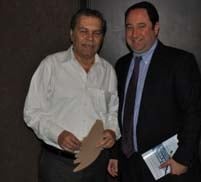
Dr. Eliyahu M. Goldratt and
Drew Greenblatt, President of Marlin Steel


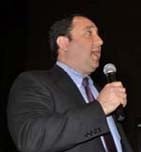
Drew Greenblatt as Chairman of RMI introduces Eli Goldratt, author of The Goal. Eli Goldratt discusses Lean Manufacturing and improving dialogue between employee
Some of the wisdom Eli Goldratt imparted to the assembled crowd: