
This year at the first virtual AME Conference, the CEO of Marlin Steel, Drew Greenblatt, participated as a panelist on the exclusive supply chain forum.
This forum was a facilitated discussion with panelists who discussed and debated about specific ways to advance and rebuild manufacturing and industrial infrastructure with automation in the aftermath of the COVID-19 pandemic.
Here are some of the key takeaways from this timely discussion piece with Marlin Steel's CEO in the supply chain forum.
What Is the AME Conference?

The Association for Manufacturing Excellence (AME) hosts the AME Conference that brings together industry experts from around the world to share their knowledge, collaborate with others, and learn about new and exciting industry trends.
AME conferences typically include over 1,500 participants, including professionals from more than 35 countries. The participants represent various sectors of manufacturing, from pharmaceuticals and food production to aerospace and defense, among many others.
Some top companies that attend this conference include Hallmark, Crown Equipment, Caterpillar, United States Postal Service, Tyson Foods, Honda R&D Americas, and Marlin Steel.
This year, the conference went virtual, and Marlin Steel's CEO, Drew Greenblatt, was one of the expert panelists on the supply chain forum.
Highlights of Marlin CEO's Presentation at the 2020 AME Conference
Here are a couple of the key takeaways from the presentation Marlin's CEO provided during the supply chain forum at the 2020 AME conference.
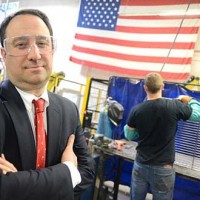 Lean Supply Chains in the Face of the Pandemic
- Supply chains were too lean, and trusted foreign vendors couldn't deliver on time, which let down supply chains.
- Supply chains should have 10 to 20 percent domestic suppliers, at minimum, in case there is a shock overseas like the one that occurred with the COVID-19 pandemic.
- Having a robust and diverse supply chain in North America could've prevented abrupt and unanticipated slow downs in the supply chain.
The Role of Automation and Digitization in the Future
- Marlin made sure to invest in state of the art press brakes and robots to provide their employees with the best technology that increases efficiency and speed.
- Marlin could not have made and delivered as many as 2,500 medical devices without a massive investment in automation.
- Companies have to lean in to automation so that employees have the best tools and the best devices at their disposal to meet difficult requirements.
Scott Luton: Hey, good afternoon! Welcome to AME Toronto 2020. It is the 36th annual conference for the Association for Manufacturing Excellence. My name is Scott Luton, founder and CEO of Supply Chain Now. I'm joined by my dear friend, colleague, and co-host, the "Startup Whisperer," Mr. Greg White. Greg, good afternoon!
Greg White: Good afternoon. I'm looking forward to this very exciting, great panel we've got set up here today.
Kim Humphrey: On behalf of AME, thank you to Scott and Greg for facilitating this important discussion. Thanks to my esteemed fellow panelists for participating in the AME conference, and most of all, thank you to everyone who's tuning in live or who may be streaming this later. Before becoming AME's president and CEO, I was responsible for supplier development for a major defense contractor, so I've been intimately involved in supply chain issues for years.
It strikes me that supply chain health was an important but often overlooked topic before COVID-19, but the pandemic shined a spotlight on the central role that our supply chains play—not just in manufacturing and healthcare, but in everyday life. Supply chain became part of society's collective consciousness as we searched for toilet paper, hand sanitizer, food, and other essential items. For AME, the supply chain issues highlighted a need for a plan of action to help industry rebound. Like with everything AME does, we came at this from a lean continuous improvement perspective with a heavy dose of people-centric leadership mixed in.
The outcome was our new Manufacturing Marshall Plan, which calls for a private-public partnership to implement reshoring, near-shoring, and lean-shoring; advocate for advanced manufacturing techniques; and enhanced skills training and education to build a stronger workforce. Lean and people are at the heart of this. You'll hear today about how implementing reshoring and Industry 4.0 innovations are smart moves for North American companies. But to make these successful, we need a skilled workforce. To make this plan work, we need a workforce that understands lean tools like standard work, training within industry, Kaizen, and value stream mapping.
To make this plan work, we need educational support from community colleges, technical schools, high schools, and apprenticeship programs like the one I was involved with at Newport News Shipbuilding. And we need education-based non-profits like AME. To make this plan work, we need leaders and champions who value and empower their employees through people-centric leadership. AME believes that for our economy and communities to fully rebound, we must embrace all three elements of our new Manufacturing Marshall Plan: reshoring, near-shoring, and lean-shoring; implementation of Industry 4.0 technology; and enhanced skills training. I look forward to unpacking this further during our discussion today.
Drew Greenblatt: This is going to be a great meeting today, a great seminar, but I think the key component we have to fixate on is how do we get more nimble? How do we get more adaptable so that when the world shifts and things happen, North America is able to capitalize on these challenges in the American and North American economy?
Scott Luton: Outstanding! Thanks so much, Drew. And we're getting a couple of comments and questions from the audience. Hey, we'd love to make this really interactive with Q&A—we may not have time, but I would want to recognize Kristoff. Kristoff really appreciates, Kim, how you set the table for this discussion. So really appreciate that. I agree with you wholeheartedly. Greg, really quick, based on what Kim and Drew have shared, what's one key theme that we're hearing early?
Greg White: Well, I think optimism. Look, I think the thing that we've all hoped for and we're starting to recognize is that this is a resilient portion of the world. As Drew said—North America, Mexico, Canada, U.S.—we've got a new agreement that enables cross-border trading and enables us to actually accomplish some of the things that we're going to talk about: reshoring, near-shoring, lean-shoring, and the like. I think that's encouraging for the market.
Scott Luton: Agreed. Okay, moving right along, I want to bring in our next panelist here today: Harry Moser, founder of the Reshoring Initiative.
Harry Moser: Harry, a little background on me: a couple of engineering degrees, an MBA, 50 years of manufacturing experience, including running a $100 million-a-year company. Family tradition of manufacturing, so I've got this in my blood. I've got some AME connection; I've been presenting and writing for AME for about eight years. Great team of volunteers, wonderful to work with.
I think a fun story I was at an AME annual, maybe 2015, and I walked into the registration area and there was a table with a lot of women there. I knew most of them—the wives of Glenn Marshall, Bill Baker, and other good friends like that. The table sign said "Companions Table." So I walked over and asked with a big grin, "Is this where a guy who's here by himself goes to find a companion?" and I got a good response—they thought it was funny.
A little overview on the Reshoring Initiative: we were founded in 2010. I founded it. The mission is to bring back 5 million manufacturing jobs from offshore. We do it three ways: we document the trend, we promote reshoring, and we enable—we provide tools to do it. I'll get into that a bit more. Some of the resources we provide: the TCO Estimator (Total Cost of Ownership). Like Deming referred to, instead of price, look at total cost.
Using these tools, companies can better evaluate their sourcing and identify which products make the most sense to bring back. Statistics from our analysis show that on average, the U.S. price is 20 percent higher than in Europe and 40 percent higher than in China. So real difficulty. But when you use Total Cost of Ownership, you see what happens in this chart. The blue line is China price as a percentage of the U.S., and 100 percent would be where they're equal. Above that, the Chinese price is higher. Only eight percent of the area under the curve is to the right of the 100 percent line—the U.S. wins eight percent. But with total costs, we win 32 percent. And if there's a Trump 15 percent tariff, then we win 46 percent.
So by getting companies to go from raw price—purchase price variance—to looking at total cost, there is a dramatic improvement in the win rate for the United States and their work coming back. We track reshoring and greenfield FDI (Foreign Direct Investment). When we started in 2010, 6,000 jobs came back that year. By 2017, 190,000 came back. So over 30 times improvement. Our business is booming. We work through MEPs (Manufacturing Extension Partnerships) in Illinois, Maryland, New York State, Ohio, Rhode Island, more states soon, plus we work directly with companies. So any of you out there that want help with reshoring, go to your MEP, especially in those states that I mentioned.
Scott Luton: Thanks so much, Harry. I appreciate your data-driven approach and what you've shared. All right, our cleanup here today—want to introduce Jay Myers, CEO of Next Generation Manufacturing Canada.
Jay Myers: Jay, yeah, thanks very much, Greg. First of all, thank you for inviting me to today's panel and discussion. I'm looking forward to it. But more than anything else, I'd just like to thank everybody for joining us here in Toronto. I don't know where you found enough hotel space, but glad you've been able to make it. Actually, I do want to welcome you here to Toronto when everything kind of calms down a little bit and you can make the trip. We've got 61-degree weather today and a really nice sunny day.
My role at Next Generation Manufacturing Canada is to lead a business that brings in and integrates private sector and public sector capital to invest in world-leading capabilities in advanced manufacturing in Canada, but looking at commercializing and hooking up those capabilities with customers and suppliers around the world. What I'd like to share with you today are some observations that I'm aware of, maybe from a Canadian perspective, but I think are applicable right across North American industry—right around the world, in fact—when it comes to what is happening with global supply chains.
You know, we've said for a long time that supply chains are what is competing, not individual companies. I think that is very much the case today. But supply chains were restructuring far before COVID. Lots of factors were influencing how companies were restructuring supply and demand, supply relationships, and the whole value chain. I think Kim is absolutely right: when we look at business processes, you have to look at the entire value chain here, and lean is an incredibly important tool. The principles of lean are incredibly important in terms of managing that whole value chain relationship.
The things which were changing for a number of reasons before COVID, COVID has just accelerated those changes. It's certainly heightened risk within the supply chain, but it's also created all sorts of opportunities for companies who can take advantage of new gaps in the supply chain. It's also accelerated the innovation that we're seeing across manufacturing—new business models, new types of products, and very exciting production processes that are themselves reshaping supply chain value chain relationships and, I think, offering North American companies a tremendous opportunity to grow in innovative ways in the future. So look forward to discussing a little bit more about that.
Scott Luton: Outstanding! Jay, thanks so much. Two quick points there: I'm glad to have a Canadian manufacturing thought leader on the panel because it really illustrates how wonderful of an opportunity we have—not just for the States, but for all of North America, especially given the special relationship we have here. Secondly, Jay, as an Atlanta Braves fan, I won't hold it against all those great Blue Jay teams of the early 90s. Y'all broke our hearts, but nevertheless, we're all friends and family here.
All right, so Greg, we're gonna dive right in. We've got two big topic areas that we're gonna pick our panelists' brains on here today. Are you ready?
Greg White: I am. Let's do this!
Scott Luton: All right. So first off, we've heard a lot—not just here in the opening few minutes of this panel session, but throughout the headlines throughout our industries—about reshoring, near-shoring, and global resourcing of global supply chains for that matter. So, a two-part question I want to pose to our panel, and Kim, we're going to start with you: what's one key recent and intriguing observation you've had in this space, and secondly, what challenges do you see when it comes to really reshoring and near-shoring?
Kim Humphrey: So those are great questions. One of the key observations right now is the implementation or the adoption of lean-shoring. You kind of hit on that a little bit earlier, Scott, but you know, organizations were reluctant to reshore or near-shore because they expected there to be an increased cost. But we're really seeing organizations applying lean and really eliminating those things that don't add value to the end customer, and also really strengthening their continuous improvement organizations as well. So I think that's something that we're really seeing.
But probably the challenge that we had even prior to this pandemic was the skills gap. We have been talking about this in our Marshall Plan. Before—I think I'm looking at my numbers here—there were 6.8 million job openings in February; this is prior to the pandemic. And so we know that we're seeing that's going to be a challenge. But we're also seeing a lot more collaboration between educators and manufacturers, and then of course the non-profits and the organizations around this table today.
Scott Luton: Outstanding, Kim. Appreciate that. The challenges we had going into the pandemic—many of them are the same, if not worse—and we've got to address those to really effectively and successfully come out stronger. Drew, let's go to you next. Same question: weigh in on reshoring, near-shoring, resourcing, and what challenges are you seeing?
Drew Greenblatt: Drew, this is a critical topic. Right in the middle of this COVID epidemic, a medical device manufacturer reached out to us because their Chinese supplier three times in a row missed their dates delivering medical devices to America, causing a COVID meltdown in several hospitals throughout our nation. They came to us and they said, "Can you make this medical device? You've never made it before. Oh, and we need it in three weeks."
That same Chinese vendor missed their dates three times, and they had to spend 120,000 dollars three different times to fly it over because they missed their date. Because of our engineering—20 percent of our employees are degreed engineers—we came up with a medical device as an alternative substitute device. They signed off on it, multiple revisions, and we rushed to get it to market and we shipped 2,500 in less than four weeks. We'd never made this before. Our biggest challenge was injection molding; we had to buy a tool and have a component injection molded, which is not really our sweet spot—we're typically sheet metal and wire.
But this is, I think, emblematic of what's happening where you have to move very quickly to capture the market. And now we have trained this client to respect our engineering, our design, our fixturing, our on-time integrity—not committing to dates we can't meet and then actually hitting them. We did come in a little higher, but we're now offering them deep inventory and they're thrilled. So I think the key takeaway at least that I'm seeing over and over again with Marlin is having that engineering skill set, having the drawings, and the deep well of talent to come up with clever ideas and then to go from zero to 180 miles an hour lickety-split so we can exploit these opportunities. Once we do this and we demonstrate that we have extraordinary quality and extraordinary engineering, it's very hard for them to leave us. It makes us more "sticky." And I think that's the key for what we need to do as a nation and as a continent—North America—to keep those opportunities that in the past we would never have had and we would never have been able to keep long-term. This is really gonna help our employees because they're gonna have long-term opportunities for growth and it's going to give long-term benefits to our communities because our factories will be more prosperous.
Scott Luton: Outstanding, Drew. Improvise, overcome, and seize the opportunities. Let's move right along. Harry, weigh in on these two topics if you would.
Harry Moser: Okay, first I'd like to agree with what both parties have said. My observation on what's happened is how rapidly the government, corporations, and consumers have picked up on the risk of dependency—the risk of not being self-sufficient. You see it all the time; that's one reason we're so busy. But nevertheless, we need to reshore three times as fast as we've been if we're gonna get to, say, a break-even on trade in 20 years. So we need to go from 150,000 a year to say 300,000 or 400,000 a year. So, a major difference.
Challenges corporations. I talk to some corporations and they say they'd like to bring it back, but they don't even know how the product's made. They outsourced it to somebody in China, and did somebody change the process or change the material? So somebody has to re-engineer it for the brand before they can bring it back; that's a challenge. Short-term focus on quarterly earnings. Poor skilled workforce—exactly what we're talking about. In comparison to Germany and Switzerland, where 60 percent of the kids go into apprentice programs, here maybe three percent go in, and that's mostly into construction, not into manufacturing where we certainly need them.
Inadequate capital investment we put about a third as much into robots and CNC machines and things like that as South Korea and China does. How can we compete if we let them out-invest us? The use of price instead of TCO like I mentioned. For governments, there's an over-emphasis on university education. You look at most of the government websites and it says "go to university, go to university," and not even engineering, but just "go to university"—almost nothing about skilled workforce. The U.S. dollar is too high; something can be done about that. We almost have a de-industrialization policy. If you designed policies to minimize industry in the United States, what we've done has been almost exactly what you'd come up with. So, the one thing the government has done well is with the CARES Act funding these MEPs that we're working with around the country, and they're making a real good start. We'll be working with a hundred companies by the end of the year.
Scott Luton: All right, am I back? Can you all hear me? Yeah, okay. So, we've got three quick questions from the audience—want to recognize Michael, Bonnie, and Carly. We can't get to your questions. Bonnie, great question on getting more skilled labor into the manufacturing industry; we touched on that. Carly, we're going to talk more about lean in this current environment. And to our panelists, if one of you all could address or weave into some part of your comments today just how attractive Mexico still is when it comes to manufacturing. So great questions, Michael, Bonnie, and Carly.
All right, let's move to Jay. Jay, same question: reshoring, near-shoring, resourcing of global supply chains, and the challenges as it relates to those items.
Jay Myers: You know, I think the first thing to say is that COVID has really highlighted not only the critical shortages that we've had in medical supplies but also the very vital role that manufacturing plays. I can't underestimate here the opportunity that we have to really emphasize how important manufacturing is—not just to creating jobs, though that's very important in itself and for economic growth, but for improving healthcare, protecting the environment, and making sure that we can secure our supply chains. All of that depends on a really dynamic, really vibrant manufacturing sector.
But what we're seeing, though, is I guess the importance of seeing the value chain as a whole. I really do appreciate the question about Mexico. We have integrated value chains across North America: the automotive industry, the aerospace industry, the agri-food industry. It depends on a well-orchestrated integrated system of not only production but of business flows, marketing, product development, and services for customers, whether they're international or here in North America. So we need to take a look at that value stream as a whole.
I think more companies are taking a look at and restructuring their relationships with customers and with suppliers as a result of that. I don't know any manufacturer who is going to be successful unless they are an integral part of their customer's success or their customer's customer's success. And I don't know any manufacturer that is going to be successful unless they have successful suppliers that can reliably produce and supply the types of goods and products and services that they require to be successful in their own right. So that element of collaboration and the shift from just simply a cost calculation to a calculation of capabilities is really crucial.
COVID has raised a lot of questions in terms of the risk and the resiliency of supply chains and the visibility down supply chains. Lean is all about focusing on customer value and then eliminating all of the non-value-adding activities—all of the waste that goes into delivering that value to customers today. Risk in the supply chain is a huge waste. If companies can focus on that and look at ways of working together—and I think this is driving much more in the way of collaboration—innovation in manufacturing, where you've got a second type of risk that was there way before COVID, is itself driving greater collaboration. Not only among manufacturers, buyers, customers, and suppliers, but with academic institutions, research centers, and technology companies that need to come together in an integrated way to provide unique manufacturing solutions.
Today, I don't think you build world-leading capabilities in manufacturing without collaboration. And then you take a look at the knowledge supply chains, the skill supply chain that goes into supporting a world-class manufacturing establishment; that's critical. The development of the workforce here in Canada—just to give you some idea—25 percent of Canada's manufacturing workforce will be retired by 2030. We have a cohort of young people which represents about six percent of our workforce today in manufacturing. Just to stay even—and I'm glad to say that of that six percent, a majority of them are actually women—but just to stay even, we are facing in Canada a challenge to increase productivity in manufacturing by a factor of about 20 to 25 percent. So that's a huge challenge and it really goes to the idea of how do we sustain globally competitive manufacturing capabilities in North America, because we're all integrated here. Canadian manufacturing depends on U.S. manufacturing, both for supply and as a major customer base. So how do we actually sustain globally competitive manufacturing? If we can't do that, then I don't think we're going to come close to what we're expecting in terms of near-shoring or reshoring.
Scott Luton: All right, thanks so much, Jay. I really appreciate that. So much more to talk about, but Greg, we're going to move right along to lean and automation, right?
Greg White: Yeah, I think an important point that Jay made is around lean and the principles of lean, which is to eliminate non-value added processes and materials and that sort of thing. I think some would say—some have said—that supply chains were too lean and were exposed prior to and going into the pandemic. So we're going to talk about that.
I'm going to ask everyone to answer on that, but on a related note, and related again to what Jay said, there are a lot of practitioners looking at the ramp-up of automation and digitization of the businesses specifically to address the concerns that each of you have expressed in terms of size of workforce, transition of workforce, and frankly, the goals of the incoming workforce. So they're wondering—I think a lot of people are wondering—how does this impact lean thinking? How does this impact reshoring? How does this impact how we conduct manufacturing in the future? So Kim, would you take that? You're the boss, so you take that and set the tone for us once again.
Kim Humphrey: So thanks. I don't necessarily think that the supply chains were too lean prior to COVID, but they were not as successful at mitigating risks. I mentioned that I came from an organization that was a defense contractor and that was something that we were really focused on—risk mitigation and particularly responding to the scheduled volatility. I don't think a lot of companies are ready for that. We saw a lot of good examples, like the distilleries that kind of moved to making hand sanitizer, but most companies struggled with the volatility of the schedules and they really didn't have any kind of buffer against these demand shocks.
So now, the other thing that I think we saw is a lot of companies knew who their tier-one suppliers were, but they weren't effectively managing and mitigating the risk for their second-tier and third-tier suppliers. One of the founders of AME has been constantly counseling Doc Hall, saying, you know, one of the tenets of lean is you've got to be agile. Those organizations that practiced agility and innovation really came out or are coming out of this a lot more successfully.
And talking about the digital world, I think—I'll go back to the workforce again because that is a passion of mine—but this next generation of workforce is coming to industry with really strong technical skills. So we're kind of embracing that generation. In AME, we've got a really renewed emerging leaders program with student chapters. So they come in and bring a lot of that technical background and we're incorporating lean. I really think this is a really good synergy and I think we're going to come out of this a lot stronger. And then I'll just finally say, Jay, I agree with you—I think even though this has been a tough time for all organizations, I see a lot more collaboration between organizations right now. People are sharing the things they might not have shared with their competitors in the past—things like PPE and how you're handling working from home. Out of something bad, there's always something good that we can see, and I think that's what we're going to see coming out of this.
Greg White: Thank you, Kim. That is great. And I appreciate you avoiding the use of the word "pivot"—you obviously intentionally have avoided that, so thank you. Drew, same to you. So tell us your thoughts on lean and how lean performed, or how it might have been impacted or impacted the situation during the pandemic, and then also the role of automation and digitization in the future.
Drew Greenblatt: I think my take on this is I think we were too lean, and I think that many supply chains were let down by trusting foreign—Chinese, for example—vendors that they would be able to perform and adhere to ship dates. And they were let down—they were let down horribly. I think that the supply chain should always have 10 or 20 percent of their base at a minimum as domestic suppliers in case there's a shock overseas. I think it is patently ridiculous that purchasing managers and vice presidents of supply chain had zero percent of their eggs in the domestic or the North American basket and they were all-in on China, and they were caught with their pants down.
So my take on this is: yes, they were too lean. And b, they did not diversify their supply chain and have a robust presence in North America, and because of that, you can hear the pain throughout the supply chain. Regarding automation: automation's critical. We have been huge investors in automation; literally, we just bought a 230-ton press brake last week, state-of-the-art, so that we could stay cutting-edge at all times. We're investing in more robots, and that's intrinsic to our health and it makes our employees' jobs much more viable because we're able to ship quickly.
Back to that medical device analogy I gave earlier: our team could not have shipped 2,500 medical devices we had never made before in such a short duration of time if we didn't have a massive investment in automation. So these North American companies have to lean in—and lean in really hard—into automation so that our employees have the best tools, the best devices at their disposal to meet very challenging requirements. Bottom line is: yes, we are too lean; yes, the supply chain is too reliant on Chinese vendors and they should have domestic suppliers; and yes, we have to lean in harder on automation. We have to increase our investment in automation so that North America can prosper even more greatly in the future.
Greg White: Too many companies were flying without a net, Drew. Yes, right? I mean, they had a plan A and no plan B. Agreed there. All right, Harry—lean and its impact and, of course, automation and digitization. Let's hear it.
Harry Moser: Okay, first before I do that, I noticed one question about TCO and how to get access to it. On our website: TCO Estimator, free to use. You just sign up, you sign in, you use it. So that's your place to find it.
On the lean subject: I accept Drew's observations, but I reject his conclusion. So for me—from my viewpoint—having the wide international supply chain with products spending six weeks getting here over 6,000 miles is totally unlean. So the design of the supply chain that we've had is not lean. And so the reason we failed was because we were not lean. A good lean solution would say that having shipping stuff long distances does not bring value to the customer—travel does not. Having too much inventory does not. Whereas having a local supplier that has enough capacity to surge, as Drew was saying—that's lean. So I say we were not lean enough.
And in terms of automation, to me it always comes down to employment. Can we have more robots and more jobs? Since reshoring and balancing the trade deficit allows us to increase manufacturing by 40 percent, the real interesting observation is that we will lose more jobs to Chinese automation if we do not automate than we will to U.S. automation if we do. We're living in a world where we have to be competitive. So let's get going, let's do automation, let's do lean, and let's bring the work back.
Greg White: Well, we're gonna do three rounds with Drew and Harry right after this! Jay, let's hear your thoughts.
Jay Myers: Well, I think really building on what Harry was saying—I don't know if lean failed as much as it was maybe too narrow an interpretation of lean, and/or the lack of any sort of lean strategy at all or lean processing at all among manufacturers. That's what caused a lot of problems. I totally agree with Harry that we need to apply lean and all the principles of lean to the entire value chain if we're going to be successful.
The other thing—it reminds me of a discussion that Dan Jones had at the last Toronto conference, actually, that I had a chance to sit down at. One of the questions that he answered was like, "Why were there only seven sources of waste?" and his answer was because seven's an easy number to understand or to remember. And it really—you know, there are all sorts of sources of waste. Risk is a huge waste. And to Kim's point, it was that maybe too narrow a view of what waste is within a company and too narrow of focus on cost and not as wide a focus as needed on other sorts of risk.
The flexibility that companies have and their ability to repurpose manufacturing processes from one product line to another is crucial here, as well as the ability to kind of build upstream manufacturing capability within companies. And that's in many ways where automation comes in and the adoption of digital technologies. Just in terms of lean and digitization and automation—you know, Deloitte has an interesting study out looking at digital transformation projects in multinationals; they say 90 percent fail. Here in Canada, we did a similar survey with a lot of small companies around adoption of advanced technologies. We found 80 percent of companies had invested in some form of advanced technology in the previous three years, and two-thirds of them did not achieve their business objectives. That has nothing to do with the technology; it has everything to do with business management—the understanding of business requirements for successful deployment, having the skills required to successfully use the technologies, and making the right choices about technologies.
But all of that comes back to understanding your basic processes. Look, if a company does not understand what is critical to delivering value for their customers, and if they do not understand what is waste in that process, then the implementation of digital technologies and the tools and the automation that all goes into that is probably not going to work. So I say: I'm a firm believer in making sure you've got the basics of manufacturing management down pat. That depends in large part on the fundamentals of lean, and if you don't, the chances are very high that any sort of digitization or automation strategy is simply not going to deliver the goods at the end of the day.
Scott Luton: Outstanding! And Greg, I want to let you comment—kind of do a quick key takeaway there before we move to the next section.
Greg White: Well, I think they're outstanding points. And even as much as Harry and Drew might say they disagree, they don't really. Drew said the problem was we were too lean; he didn't say lean was the problem. And he's not wrong in that regard. And I think to Harry's and Jay's point, it was a misapplication of lean principles or misunderstanding of lean principles that really caused that in a lot of cases. And I think it also goes to the point that that may be true in some industries or with some practitioners and not with others.
But you know, the key points that were all addressed here is: we need to have a plan B, right? You can't rely on a single supplier. And Scott, we've been saying this for months. Literally, we started talking about reshoring about, I don't know, two weeks after the whole COVID thing came down on March 13th. And you have to provision for that in the supply chain risk management. And I will say this until my dying day: risk management is the job of supply chain. Supply chain has a single job, and that is to get the product to the customer when they want it, right? And everything else that we do is either an assistance or a hindrance in that process, and we have to be keenly aware of that. So this mitigation of risk that Jay and Harry and Kim and Drew have all talked about is incredibly important. It should be our number one focus, and it is not exclusive of lean to do that, as Jay just so eloquently said—it's a foundational portion of what lean principles are about.
Scott Luton: Yep, great points. And gotta wrap up here, but I want to read a couple of comments from the audience real quick. Jay mentioned the last time the AME conference was in Toronto—he didn't give the year—so to the audience, the first person that drops the year that took place in Toronto first, we're going to get you a little goodie. I want to read this comment from Jim. Several y'all at AME, AME determines the winner. Jim says, "I agree on risk. Great point. It is not just delivery risk; it is your IP. You invented the product and then you gave it away." Miguel Aguilar says, "Hey, was it really a misapplication speaking to lean, or could it be the right application for the wrong vision and target? Agreed to squeeze out all costs—I would argue that's a misapplication, but point taken."
And I'll just add to that: I think this going back to Drew referencing empty shelves—look, for all of us, that was a shock to the system. Disagreements on lean and definitions and applications have been around forever, but in 2020, when you see empty shelves, you know that just amps up the rhetoric, right? Looking forward to continuing having these really meaningful conversations with experts that have been there and done that when it comes to successfully applying the correct and appropriate definition of lean the right way—not just cost cutting and putting a lean banner on it.
One final comment I want to throw out there: we've got three minutes before final thoughts. We haven't touched on environmental impact yet, and we've got this great question from Carly. I'm going to do a quick toss-up—whoever takes it, think two minutes. She says, "As we move forward, how will future leaders maintain lean businesses and supply chains while minimizing negative environmental impacts?"
Harry Moser: I've got an answer. We did a study on a two-pound aluminum die casting, comparing making it in China and shipping it here, or making it here. And the CO2 impact was cut by at least 25 percent by doing it here instead of making it there and shipping it here. It's clear that supplying locally is a boon for the environment.
Drew Greenblatt: Amen. When we make something that's chrome plated, it goes through very challenging EPA standards, which is great because it's better for the Chesapeake Bay, it's better for the Mississippi River. In foreign countries like India or China, they dump it into the Yangtze—the effluent I'm talking about. So we are the clean alternative. Our manufacturing processes are powered by nuclear or natural gas; these are much lower emission generators than coal in China. And we don't despoil the environment. We care about the environment. So the best way to protect the environment is to use North American manufacturing and not Chinese or Indian manufacturing.
Scott Luton: Outstanding! Thanks so much, Drew. Jay and Kim—Jay, any comments there on environmental impact, or are we ready to move on?
Jay Myers: I think everybody else has really touched on some key points. I'd also say, you know, when we look at waste, let's not forget environmental waste because that's—whether it's energy or water or emissions or whatever it is—a huge source of waste. It has to be integrated into an environmentally sustainable business strategy.
Scott Luton: Excellent! All right, we've got to move on. AME says that Carla Kimmel Smith was the first with the right answer, so congrats to Carla. Let's connect after today's show—Toronto 2013 was the last Toronto conference. Jim, one final comment here: Jim says, "Drew, another great point. People do not believe until they see; they have to go to China to see."
All right, good stuff there. So as we start to wrap up—and we hate to do it—everyone's juices are going. We're talking about some really good, very meaningful stuff in a really challenging year. Let's move to the wrap-up. We will start with Drew Greenblatt, president and owner of Marlin Steel Wire Products LLC. Drew, give us a couple of final comments here.
Drew Greenblatt: Bottom line is: very enthusiastic about the future. We are at a tipping point where people are realizing finally: now is the time to reconsider North American manufacturing. Now is the time to not have all your eggs in the Chinese basket or the Asian basket, and put your product line into America, into Canada, into Mexico, where you'll have a stable product line with no drama, on-time delivery, and good feedback for product development. We're at an extraordinary time. I'm very optimistic. I see a lot of American, Canadian, and Mexican manufacturing thriving over the next couple of years. It's a good time to be in manufacturing.
Scott Luton: Outstanding! Love that passion. Harry, we're gonna move to you: Harry Moser, founder of the Reshoring Initiative. Final comments.
Harry Moser: Yeah, Rahm Emanuel, Machiavelli, and maybe Churchill said: "A serious crisis should not be wasted." And we've had a serious crisis—we're still in it—and it's important that we don't waste it, that we take advantage of this and improve everything we can to avoid the next crisis. This is the time to let companies go lean and bring their work back. Offshoring and lean are intrinsically incompatible. The use of lean, TCO, and automation can increase the proportion of work that can be brought back. And on a—I think—an important side note: the best solution for disadvantaged inner-city populations and abandoned rural populations is a good solid manufacturing job with career opportunities for advancement.
Scott Luton: Outstanding! All right, Jay. Jay Myers, CEO, Next Generation Manufacturing Canada. You're up. Final comments.
Jay Myers: Yeah, thanks a lot, Scott. I just want to echo what Drew and Harry have said for sure. But let's not forget that we have to be globally competitive going forward, and let's not take our eye off the ball of the fact that Chinese companies are also—they're not reshoring, they're expanding their footprint around the world here, very strategically and from a business point of view as well as a technological point of view. And let's not take our eye off where innovation is going and technology is going. We've got to be there, right up front, as leaders in manufacturing. That's going to depend on a really solid understanding of the entire value chain and collaboration. But above all, it's going to take superb business management. We have tremendous opportunities, but the only way we can take advantage of those opportunities moving forward is if we have the best value chains, the best supply chains in the world anchored here in North America.
Scott Luton: Outstanding! Wow. All right, so Greg, I'm gonna do a little switcheroo. I want to save Kim for last because, as you pointed out, she's the boss. Greg, give us your quick key takeaway as we wrap up here before we finish up with Kim.
Greg White: Man, I want to run through a wall after listening to these folks! But you know, I think the justification for that upbeat perspective is well-founded. Look, you take risk out by having at least an alternative in North America. You take cost out—and an economic or ecosystem impact out—by having facilities in North America. These professionals have acknowledged that cost and automation and digital transformation are necessary to be done with a strategic perspective in order to give us the kind of advantage or even put us on a level playing field with China, right? China's people in manufacturing make 13,000 a year, and there are 400,000 of them. So it's virtually impossible to duplicate the workforce in China even with the accumulation of workers in the world, and if you did, it would still cost you more.
So we've acknowledged that we need to elevate—and Drew, I think, obviously cares a lot about his people, about his team. We have to elevate the role of human beings in the process. We have to supplement and augment their role with automation so that they are uplifted into higher-level roles—more human-fit roles, safer roles, and roles that have more of a strategic impact than a robot can have. And then you consider that plus all of the risk that you avoid by not having to come across the ocean for 30, 60, 90 days or more, even aside from whether your vendor can provide those goods. I think it just makes a lot of sense. Manufacturing does have their eye on the ball—obviously, if these professionals have anything to say about it, they do and they will continue to do that. So it's very encouraging.
Scott Luton: Outstanding! All right, huge round of applause for you and your team, Kim. We've heard initial feedback about the quality of the conference in this challenging time, and this year turnout has been far better than I even anticipated. Kim, give us some final comments here, please.
Kim Humphrey: So first of all, thank you for acknowledging the team; I really appreciate that. They're just an awesome team. I don't know if we mentioned, but we almost had 1,300 people attend this conference, and this is a virtual conference. So that's pretty amazing—yes, I definitely give a lot of kudos to our team.
But wow, this is a great way to close out day one of the international conference. We spent a lot of time today discussing lean's role and reshoring and advanced manufacturing, and it's really inspiring to know that people like Drew and Harry and Jay are all helping to lead the charge to repair our supply chain. AME is proud to play an important role in bringing lean thinking and people-centric leadership to the conversation. So while today will be ending, this is a long-term dialogue that's going to continue as we reshore our supply chains and jobs, as we equip our factories with new technology and build the workforce that supports these necessities. So I want to thank you again to Drew, Harry, and Jay, and Scott and Greg and the Supply Chain Now team. And of course, thank you to everybody who joined us today. I really encourage you to connect with me, my fellow panelists, and our moderators just to see how you can help continue to bring the new Manufacturing Marshall Plan to life. You can download this plan at ame.org/marshall-plan. So I'm going to yield back the balance of my time to Scott, but thank you all for everything.
Scott Luton: Outstanding! Kudos to each of you, our esteemed panelists. It was as good as Greg and I thought it would be. Big thanks to the audience. Reach out and compare notes with these panelists after the fact. One more thing, right? A big treat tomorrow morning at 9:00 a.m. Eastern Time: Lynn Terrell with Flex. Right, Greg?
Greg White: Yeah, I think that's going to be an important part of continuing this momentum and making sure that this show continues to be the excellent experience that it's been to date.
Scott Luton: That's right. You can find it—they've made it really easy. Go to the online event guide. For more information on these excellent and very informational pathways series, go to ame.org/pte. You can learn more about us at supplychainnow.com. Hey, we're going to challenge each of the attendees as we challenge our own team: do good, give forward, and be the change that's needed. If these folks here—these leaders and these attendees—don't get you ready to run through walls and grow the manufacturing community throughout North America, check your pulse. Have a great afternoon, everybody! Thank you.
Want to make a shift in your supply chain? Order custom American-made steel forms and stainless steel wire products from Marlin Steel. The professional engineers at Marlin can meet your requirements and ensure that your products get to you fast.
Contact Marlin's degreed engineers today!

.gif "View our in-stock products")