
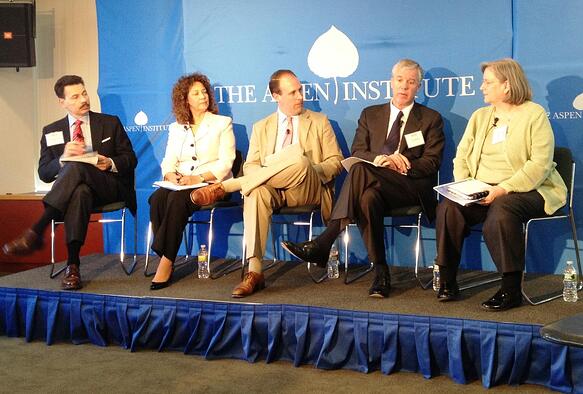
At an Aspen Institute policy seminar focused on the manufacturing “skills gap,” leaders from education, industry, and workforce development highlighted a challenge facing U.S. manufacturers: more than 600,000 open positions and too few applicants with strong technical skills. During the event, University of Phoenix Senior Vice President Tim Welsh pointed to Marlin Steel as “the poster child for CEO-level commitment to training workers for advanced manufacturing.”
That recognition has only grown stronger in the years since.From Small Shop to Advanced Manufacturing Success Story
When Drew Greenblatt purchased Marlin Steel in 1998, the company was a 19-person operation in Brooklyn making wire baskets for bagel shops. As global competition increased, Marlin transformed its model—pivoting from commodity products to high-precision, custom-engineered solutions for aerospace, automotive, medical, and food processing industries.
Guided by its motto Quality Engineered Quick®, Marlin invested heavily in automation and workforce development, achieving a 35-fold increase in sales and adding over 130 employees across three factories.
This approach also earned national recognition, including the 2025 National Metalworking Reshoring Award.
A Skills-Based Workforce Strategy
The Aspen Institute’s 2025 UpSkill America research highlighted Marlin Steel’s innovative talent model as a blueprint for solving the modern skills gap. Key practices include:
- Structured pay-for-skills training, where employees earn permanent raises for mastering new machines and processes.
- Vendor-led certifications and hands-on training to build advanced manufacturing capabilities.
- Clear, transparent career pathways that give employees full control of their earning potential.
- A culture of curiosity and continuous improvement, reinforced at every level of the organization.
This system has produced exceptional retention, higher productivity, and a more agile workforce—critical advantages as manufacturers face rapid technological change.
Creating Opportunity and Expanding the Talent Pipeline
Marlin Steel’s commitment to training has opened doors for workers from a wide range of backgrounds, including individuals without prior manufacturing experience. Many employees interviewed by UpSkill America described Marlin as a place where they were given opportunities to learn, grow, and build stable careers through skills acquisition.
This approach aligns with broader national efforts to strengthen the U.S. manufacturing workforce and improve diversity in STEM and industrial careers.
A Model for the Future of U.S. Manufacturing
The skills gap remains one of the most urgent challenges facing American industry, but Marlin Steel demonstrates a proven path forward:
Invest in people, build skills from within, and create a workplace where employees can grow alongside the business.
The result is a resilient workforce, stronger communities, and a competitive advantage that continues to draw national attention—from Forbes to Congress to the Aspen Institute.
.gif "View our in-stock products")