
When specifying zinc-plated parts, the term “zinc-plated” is often used broadly, but it can refer to multiple manufacturing approaches with very different performance characteristics.
For engineers, buyers, and OEMs, understanding these differences is critical to selecting the right material and coating for corrosion resistance, durability, and cost efficiency.
At Marlin Steel, we manufacture zinc-coated components using U.S.-sourced materials and support all three primary approaches—zinc plating, galvanizing, and pre-galvanizing—so that each solution is engineered for its specific application.
What Does “Zinc-Plated” Actually Mean?
“Zinc-plated” typically refers to steel parts coated with a thin layer of zinc through an electroplating process to improve corrosion resistance.
However, in real-world usage, the term is often used interchangeably to describe three different methods:
- Zinc plating (electroplating after fabrication)
- Hot-dip galvanizing
- Pre-galvanized steel (coated before fabrication)
Each method offers distinct advantages depending on the environment, tolerances, and performance requirements.
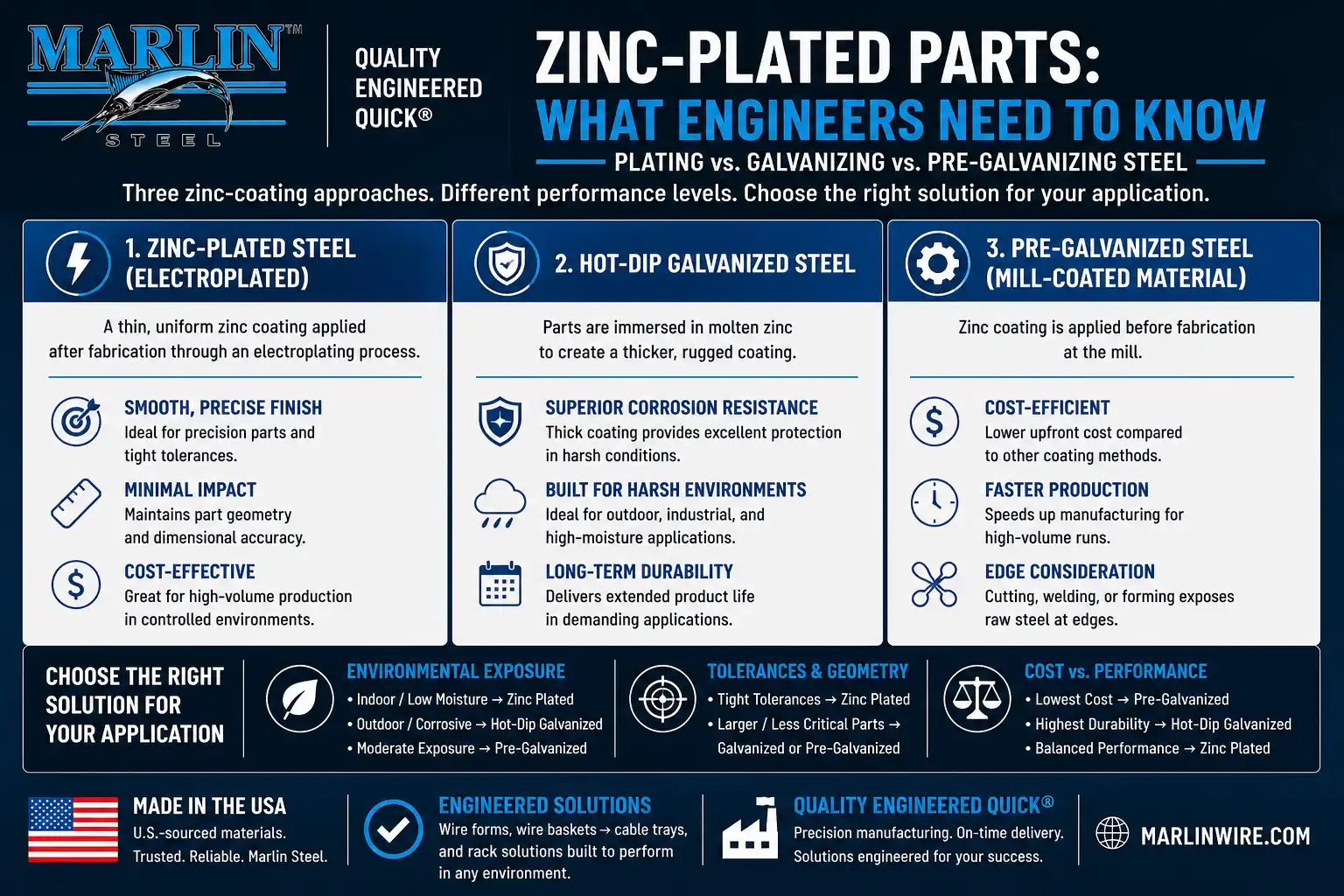
What Are The Three Types Of Zinc-Coated Steel Parts?
Understanding how zinc is applied is key to selecting the right approach.
1. Zinc-Plated Steel (Electroplating)
Zinc plating is an electrochemical process where a thin, uniform zinc coating is applied to finished steel components.
Best suited for:
- Precision wire forms and sheet metal parts
- Tight tolerances and dimensional accuracy
- Indoor or controlled environments
Key benefits:
- Smooth, consistent finish
- Minimal impact on part geometry
- Cost-effective for high-volume production
2. Hot-Dip Galvanized Steel
Hot-dip galvanizing involves immersing fabricated steel parts in molten zinc, creating a significantly thicker protective coating.
Best suited for:
- Outdoor or high-moisture environments
- Industrial applications with corrosion exposure
- Structural components requiring long-term durability
Key benefits:
- Superior corrosion resistance
- Thicker coating compared to electroplating
- Extended product lifespan in harsh conditions
3. Pre-Galvanized Steel (Mill-Coated Material)
Pre-galvanized steel is coated at the sheet or wire stage before fabrication.
Important consideration: Any cutting, welding, or forming after coating exposes raw steel at edges or joints.
Best suited for:
- High-volume production runs
- Cost-sensitive applications
- Moderate corrosion environments
Key benefits:
- Lower upfront cost
- Faster fabrication timelines
- Consistent base material coating
What Is the Difference Between Zinc Plating And Galvanizing?
The primary difference lies in coating thickness, durability, and application:
- Zinc plating: Thin, precise, smooth finish for controlled environments.
- Galvanizing: Thick, rugged coating for long-term corrosion resistance.
In general:
- Use zinc plating when precision and appearance matter.
- Use galvanizing when durability and environmental exposure are the priority.
Which Zinc Coating Option Is Best For Your Application?
Selecting the right approach depends on three critical factors:
1. Environmental Exposure
- Indoor/low moisture → Zinc plating
- Outdoor/corrosive → Hot-dip galvanizing
- Moderate exposure → Pre-galvanized steel
2. Tolerances and Part Geometry
- Tight tolerances → Zinc plating
- Larger or less precision-critical parts → Galvanized or pre-galvanized
3. Cost vs. Performance Requirements
- Lowest cost → Pre-galvanized
- Highest durability → Hot-dip galvanized
- Balanced performance → Zinc plated
What Base Materials Are Used For Zinc-Coated Parts?
Most zinc-coated components begin with low-carbon steels such as 1018 or 1020, selected for:
- Excellent formability
- Consistent weldability
- Strong coating adhesion
Material selection plays a critical role in ensuring coating performance, especially in demanding applications.
Why Does Manufacturing Location Matter For Zinc-Coated Parts?
The quality and consistency of zinc-coated components are heavily influenced by manufacturing controls.
Working with a U.S.-based manufacturer like Marlin Steel provides:
- Traceable, high-quality raw materials
- Consistent fabrication and finishing processes
- Faster turnaround times
- Reduced supply chain risk
This is especially important for industries requiring repeatability and compliance.
How Does Marlin Steel Manufacture Zinc-Coated Parts?
Marlin Steel supports all three zinc-coating approaches, allowing engineers to select the best solution for their application:
- Zinc-plated fabricated components
- Hot-dip galvanized assemblies
- Pre-galvanized material fabrication
With advanced CNC wire forming, laser cutting, and precision fabrication capabilities, Marlin ensures:
- Tight tolerances
- Repeatable quality
- Fast production timelines
How Do Zinc-Coated Parts Support Corrosion Resistance In Demanding Environments?
Zinc acts as a sacrificial coating, meaning it corrodes before the underlying steel—protecting the base material from degradation.
This makes zinc-coated components ideal for:
- Industrial manufacturing environments
- Medical and clean applications (when properly finished)
- Outdoor infrastructure
- Material handling and storage systems
Final Thoughts: Choosing The Right Zinc-Coated Solution
Not all “zinc-plated” parts are the same.
Understanding the differences between zinc plating, galvanizing, and pre-galvanized materials allows engineers and buyers to make more informed decisions based on:
- Environmental conditions
- Performance requirements
- Budget constraints
For high-performance applications, selecting the correct coating method upfront can significantly impact product longevity and reliability.
Need Help Specifying Zinc-Coated Parts?
Marlin Steel works directly with engineers and procurement teams to determine the optimal material and coating approach for each application.
Request a consultation to discuss your project requirements and identify the right zinc-coated solution.
.gif "View our in-stock products")